

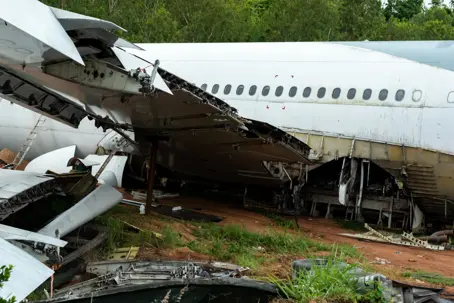
After a plane crash, the need for answers is immediate. The National Transportation Safety Board’s work is deliberate because a reliable explanation depends on preserving evidence, testing records, and separating facts from early assumptions.
The NTSB process is essential, but it doesn’t decide legal responsibility or provide an immediate answer. At Robb & Robb, we know that understanding the difference between a safety investigation and a civil accountability investigation matters from the beginning.
Contact our legal team today at (877) 749-4999 to discuss how we can protect your rights and pursue an independent civil investigation on your behalf.
The First Hours: Securing the Scene & Gathering Facts
The first stage of an NTSB plane crash investigation focuses on facts, not blame. Once the agency is notified and decides to investigate, it assigns an Investigator-in-Charge, or IIC, to lead the work and coordinate the response.
For major events, the NTSB may send a Go Team with investigators assigned to distinct technical areas. Their first job is to document and preserve evidence that can answer later questions, including aircraft wreckage, weather conditions, and air traffic communications.
Evidence also exists far beyond the crash site. Investigators gather flight logs, maintenance records, and witness accounts. If recovered, a flight data recorder stores aircraft performance information, while a cockpit voice recorder captures sounds and communications in the cockpit. Those devices are only part of a much larger factual record.
Early news reports often rely on limited information from this phase. An observation about airport weather or debris location isn’t a finding about why the aircraft crashed.
Who Participates in an NTSB Aviation Investigation
The NTSB leads the investigation, but aviation crashes often require knowledge across many fields. The IIC organizes working groups so technical information is collected consistently and shared through the official investigation.
Depending on the crash, a Go Team can include investigators focused on:
- Operations, including flight planning, pilot actions, and company procedures.
- Structures, powerplants, and aircraft systems.
- Air traffic control, weather, human performance, and survival factors.
The Federal Aviation Administration receives party status in NTSB aviation investigations by statute. The NTSB may also designate organizations such as airlines, manufacturers, and labor unions as parties when they have technical knowledge needed for fact gathering.
Party representatives help develop the factual record under NTSB direction, but they don’t decide the outcome. The NTSB independently analyzes the evidence and determines probable cause, its safety finding about the accident’s causes and contributing circumstances.
How Preliminary Reports, Dockets & Final Findings Differ
Public releases answer different questions at different stages of an investigation. Reading each document for what it is prevents a preliminary fact from being mistaken for a conclusion.
Preliminary Report
A preliminary report is typically available within two weeks of an aviation accident. It summarizes factual information collected during the on-scene phase but doesn’t include analysis or a probable-cause finding.
Accident Docket
After fact gathering, the NTSB opens an accident docket. It can include interview transcripts, photographs, laboratory reports, maintenance materials, and other factual documents developed during the investigation.
Final Report
This report brings together factual information, analysis, findings, and the NTSB’s probable-cause determination. In some significant matters, the five-member Board adopts it at a public meeting.
The docket reveals the breadth of the factual inquiry, but it isn’t a shortcut to an answer. Individual documents must be read in the context of the complete record and the agency’s later analysis.
Why NTSB Investigations Take 12 to 24 Months
A general aviation investigation often takes 12 to 24 months, with the agency’s conclusions commonly released about 18 to 24 months after the accident. Complex wreckage, damaged recording devices, laboratory testing, and large volumes of records can all affect the timeline.
During the analysis stage, investigators compare physical evidence, recorded data, and witness accounts. They test whether a proposed explanation fits all known facts rather than identify the first unusual event and stop there.
An NTSB investigation isn’t a quick search for a single mistake. Under federal regulations, the agency investigates an accident’s facts, conditions, and circumstances to determine probable cause and issue safety recommendations intended to prevent or reduce similar events.
In some investigations, the NTSB holds a hearing where witnesses give sworn testimony to develop facts. A hearing doesn’t assign legal fault, and the agency’s eventual findings don’t resolve every question a family may need answered.
What an NTSB Investigation Doesn’t Resolve for Families
An NTSB probable-cause finding serves aviation safety, not civil liability. It doesn’t determine who owes damages to a family, what legal duties were breached, or how responsibility should be allocated among the people and companies involved.
That distinction is reflected in the party process. Claimants, insurers, and people pursuing litigation interests can’t serve as party representatives in an NTSB investigation. The agency also doesn’t investigate crimes. If a transportation tragedy is determined to be a criminal act, local law enforcement or the FBI takes the lead.
Families don’t need to wait passively for the NTSB’s conclusions. They can preserve materials in their possession, including:
- Photographs and messages.
- Travel documents.
- Billing records.
They should also avoid drawing conclusions about the cause from incomplete public information.
An independent civil investigation can proceed on its own timeline while the NTSB completes its safety work. In our aviation accident investigations, we examine maintenance logs, pilot training, and flight data, and we coordinate with aviation safety and engineering professionals to assess evidence relevant to accountability. In litigation arising from the helicopter crash that killed Kobe Bryant and Gianna Bryant, we represented Vanessa Bryant. The matter was resolved through a confidential federal settlement before trial.
How Families Can Follow the Investigation
The most useful approach is to treat early releases as factual updates, the docket as a developing record, and the agency’s conclusions as a safety determination rather than a legal verdict. This leaves room for the evidence to develop without losing sight of the steps needed to preserve a family’s interests.
For families considering an aviation accident liability claim, we can conduct a comprehensive investigation alongside the public process.
To discuss an airplane crash case and what information to preserve, contact Robb & Robb at (877) 749-4999.